Frequently asked questions
About liquid helium.
Practical background for an initial enquiry. The technical specification of your installation always remains leading.
What is liquid helium?
Liquid helium is helium cooled to about 4.2 kelvin, approximately −269 °C. It is used in cryogenic installations, superconducting systems and very-low-temperature research.
Which vessel is required?
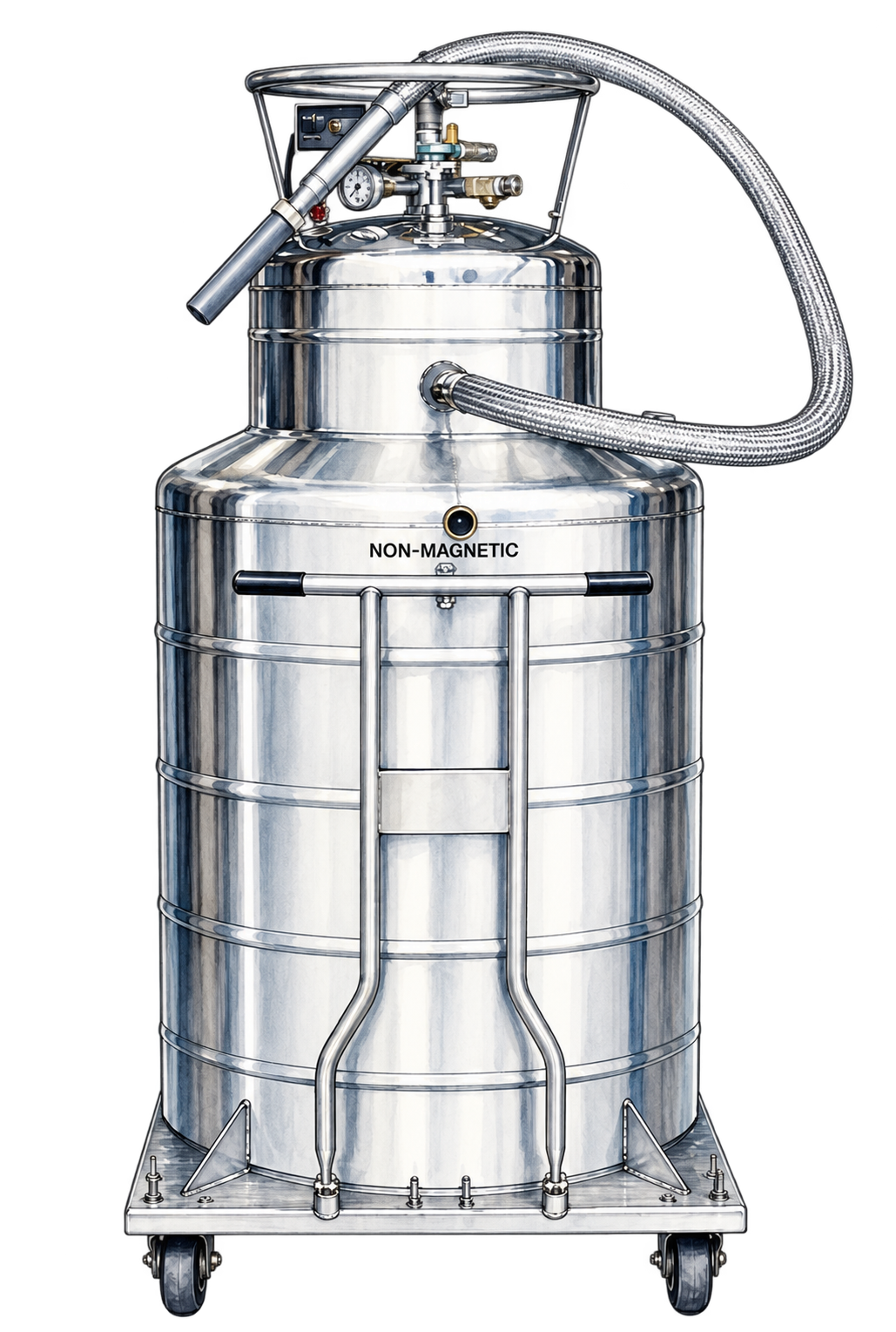
A suitable vacuum-insulated cryogenic vessel or dewar is required. Capacity, connection, working pressure, pressure relief and compatibility with the system must be known beforehand.
Can delivery be recurring?
Yes. One-off and recurring supply can be considered based on consumption, location, vessel and desired schedule.
What happens when liquid helium warms up?
It evaporates and occupies much more volume as a gas. Unobstructed pressure relief, ventilation and an appropriate work procedure are therefore essential.
Which protection is required?
The risk assessment determines the measures. These may include suitable cryogenic gloves, eye and face protection, ventilation and oxygen monitoring. Only trained personnel should operate the system.
Is liquid nitrogen the same as liquid helium?
No. Helium is much colder and has different physical properties. Equipment and procedures for nitrogen must not be used for helium without a technical assessment.